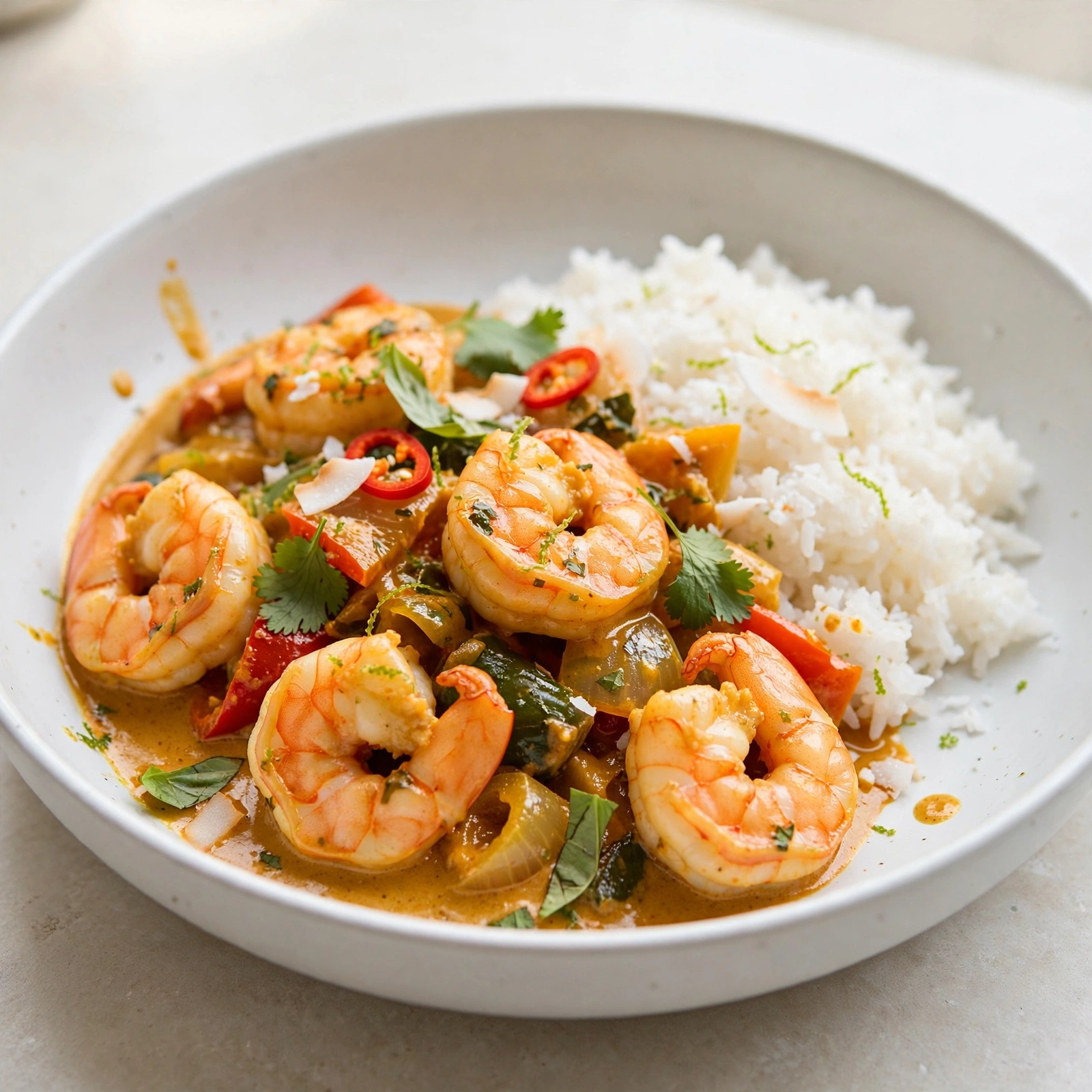
Thai Shrimp Curry with Coconut Rice
This Thai shrimp curry simmers plump shrimp in a rich coconut red curry sauce, served over fragrant coconut rice for a restaurant-quality dinner in under 40 minutes.

A Bowl of Sunshine: Thai Shrimp Curry with Coconut Rice
There is something almost magical about a bowl of Thai shrimp curry ladled over warm, pillowy coconut rice. The sauce is rich and silky, the shrimp are tender and just barely kissed by heat, and the whole dish smells like garlic, ginger, and red curry paste blooming in hot oil. If you have been searching for an easy way to make shrimp with coconut rice that tastes like it came from your favorite Thai restaurant, this is the recipe to bookmark.
This version of Thai basil shrimp rice comes together in well under an hour, using a handful of pantry staples and fresh shrimp. It is the kind of weeknight dinner that feels special enough for guests but is simple enough to make on a Tuesday.
Before we get cooking, the right tools and ingredients genuinely change the outcome here. A good quality red curry paste and full-fat coconut milk are the backbone of this dish, and a sturdy wok or wide skillet helps the shrimp cook evenly without crowding.
What Makes This Shrimp Coconut Curry So Good
Most shrimp curry recipes Thai cooks rely on follow a similar formula: aromatics, curry paste, coconut milk, and a quick simmer. What sets this one apart is balance. We bloom the curry paste in oil first to wake up its flavor, then layer in fish sauce, a touch of brown sugar, and fresh lime juice at the end to keep everything bright instead of heavy.
- Garlic and ginger build the aromatic base.
- Red curry paste brings heat, depth, and that signature Thai curry color.
- Coconut milk mellows the spice into a creamy, comforting sauce.
- Fresh lime and basil add a final layer of brightness right before serving.
Chef's Tip: Always add the shrimp last and watch them closely. Shrimp cook in just a few minutes, and overcooked shrimp turn rubbery fast. Pull them the moment they curl and turn opaque pink.
Coconut Rice: The Other Half of the Dish
A great shrimp coconut milk recipe is only half the story without the rice underneath it. Instead of plain steamed rice, we cook jasmine rice directly in coconut milk and water, which infuses every grain with a subtle sweetness that pairs perfectly with the spicy curry sauce. It is a small step that makes a noticeable difference.
If you are wondering how to make shrimp with coconut rice taste truly restaurant-quality, this combination of coconut-cooked rice and a well-balanced curry sauce is the answer. The rice soaks up extra sauce on the plate, so nothing goes to waste.
Building the Curry, Step by Step
Once your aromatics are sizzling and your curry paste has bloomed, the rest of this Thai shrimp curry with rice comes together quickly. The sauce simmers gently while the bell pepper softens, then the shrimp go in for just a few short minutes. A final squeeze of lime and a handful of torn basil leaves finish the dish with freshness that cuts through the richness of the coconut milk.
This is the kind of shrimp curry recipe that rewards a little patience during the simmering stage but moves fast once the shrimp hit the pan, so have your rice ready and your bowls warm before you start that final step.
Ready to make it? Here is the full step-by-step recipe:
Thai Shrimp Curry with Coconut Rice
This Thai shrimp curry simmers plump shrimp in a rich coconut red curry sauce, served over fragrant coconut rice for a restaurant-quality dinner in under 40 minutes.
Ingredients
- 1 1/2 cups jasmine rice, rinsed until water runs clear
- 1 can coconut milk, full-fat, for the rice
- 1 can coconut milk, full-fat, for the curry
- 1 1/2 lb large shrimp, peeled and deveined, tails removed
- 3 tbsp red curry paste, Thai-style, adjust to taste
- 1 tbsp fish sauce
- 1 tbsp brown sugar, or palm sugar
- 1 red bell pepper, thinly sliced
- 3 cloves garlic, minced
- 1 tbsp fresh ginger, grated
- 1 tbsp vegetable oil, for sauteing
- 1 lime, juiced, plus wedges for serving
- 1/2 cup fresh Thai basil, leaves loosely packed, plus extra for garnish
- 1 1/4 cups water, for cooking the rice
- 1/2 tsp salt, for the rice
Instruction
Combine the rinsed jasmine rice, one can of coconut milk, water, and salt in a medium saucepan. Bring to a boil, then reduce heat to low, cover, and simmer for 18 minutes, or until the rice is tender and the liquid is absorbed. Remove from heat and let it sit, covered, for 5 minutes before fluffing with a fork.
While the rice cooks, pat the shrimp dry with paper towels and season lightly with salt. Set aside.
Heat the vegetable oil in a large skillet or wok over medium heat. Add the garlic and ginger and saute for about 30 seconds, until fragrant but not browned.
Add the red curry paste to the skillet and cook for 1 to 2 minutes, stirring constantly, to bloom the spices and deepen the flavor.
Pour in the second can of coconut milk and whisk well to dissolve the curry paste into a smooth sauce. Bring to a gentle simmer.
Stir in the fish sauce and brown sugar. Add the sliced red bell pepper and simmer for 4 to 5 minutes until the pepper begins to soften.
Add the shrimp to the simmering sauce in a single layer. Cook for 3 to 5 minutes, flipping once, until the shrimp turn pink and opaque and are just cooked through. Avoid overcooking.
Remove the skillet from the heat and stir in the lime juice and fresh Thai basil leaves. Taste and adjust seasoning with extra fish sauce, sugar, or lime as needed.
Fluff the coconut rice once more and divide it among bowls. Ladle the shrimp curry generously over the top.
Garnish with extra basil leaves and lime wedges, then serve immediately while hot.
Equipment
- Medium saucepan with lid
- Large skillet or wok
- Whisk
- Wooden spoon or spatula
- Measuring cups and spoons
Notes
Serving, Storing, and Tasty Variations
Serve this curry hot, straight from the skillet, with extra lime wedges and a sprinkle of fresh basil on top. A side of quick-pickled cucumbers or a simple cucumber salad makes a refreshing contrast to the richness of the coconut sauce.
For variations on this classic Thai curry recipe with shrimp, try these swaps:
- Add a handful of snap peas or baby corn for extra crunch and color.
- Stir in a spoonful of peanut butter for a richer, nuttier sauce.
- Use green curry paste instead of red for a milder, herbier flavor profile.
Leftovers keep well for up to two days when stored separately in the fridge, just reheat gently so the shrimp stay tender. However you serve it, this shrimp curry recipe is proof that a few simple ingredients, treated with care, can taste like something truly special.